

Metal detector for food, or X-ray?
A metal detector only recognizes metal.
10+ years in Mexico's Bajío region
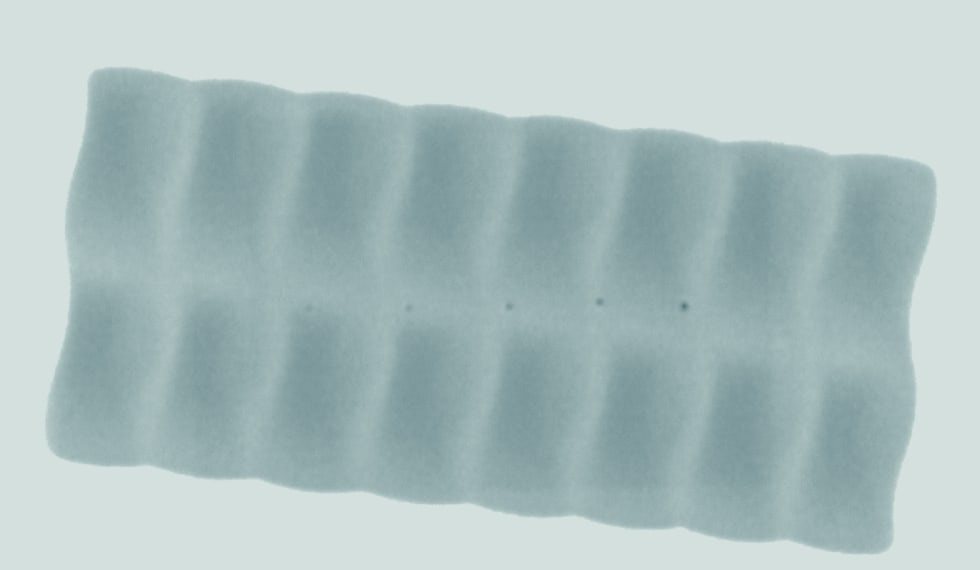 Metal: both see it
metal.bone? glass? stone?
A food metal detector finds metal: ferrous, non-ferrous and stainless.
Bone, glass, stone and hard plastic aren't metal, and they slip through without anyone knowing. Here's what each system detects and when you need one, the other or both.
What each system detects
A food metal detector sees metal. X-ray sees dense foreign bodies, metal included.
| Metal detector | AI-powered X-ray | |
|---|---|---|
| Calcified bone | No | Yes |
| Glass | No | Yes |
| Hard plastic and dense rubber | No | Yes |
| Ceramic and stone | No | Yes |
| Ferrous, non-ferrous and stainless metal | Yes | Yes |
How small a contaminant each one finds depends on the contaminant, your product and line speed: it's confirmed with your samples.
Which one does your line need?
- Metal only
A metal detector is enough
If your hazard analysis says the only foreign body that can reach your product is metal, a metal detector covers that hazard.
- Bone, glass, stone or plastic
You need X-ray
A metal detector can't see them because they aren't metal. AI-powered X-ray looks for the density difference between the contaminant and your product, and it sees metal too.
- Both
Use both systems
One option is to keep the metal detector as the first barrier and place the X-ray before final packaging.
Your hazard analysis decides
What food safety managers ask
What does a food metal detector detect?
Metal: ferrous, non-ferrous and stainless steel. It can't see anything that isn't metal: bone, glass, stone, ceramic or hard plastic. How small a metal fragment it finds depends on the equipment, your product and line speed.
Do I need to replace my metal detector?
Not necessarily. X-ray can complement your metal detector or replace it. One option is to keep the detector as the first barrier and place the X-ray before final packaging. Your hazard analysis decides.
Which contaminants does X-ray detect?
Dense foreign bodies: metal (ferrous, non-ferrous and stainless), glass, calcified bone, stone, ceramic, high-density plastic and rubber. Whether it sees them depends on their size and their density difference from your product; light plastics may not show up. That's why we test with your samples.
What if my line only needs a metal detector?
We'll tell you. In the 30-minute assessment we review your hazard analysis and which foreign bodies can reach your product. If it's only metal, you don't need X-ray.
Does X-ray affect my product?
An inspection system examines the product; it doesn't treat it. In Mexico, X-ray equipment is regulated by the CNSNS.
What if my plant already has BRCGS, SQF or HACCP?
Even better. Those schemes require you to control the physical hazards in your risk analysis. If the X-ray system or the metal detector becomes a critical control point in your HACCP plan, the record of every inspection and every reject is evidence for your audit.
The real image, the system's spec sheet and the test with your samples.
See whether the piece is completeQuality controlThe same system counts pieces and checks fill and seal.
See what it would cost on your lineGet an X-ray quoteTell us which product you want to test.
Detector, X-ray or both?
Test with your samples: we run your product through the system and you see what it detects before you invest.